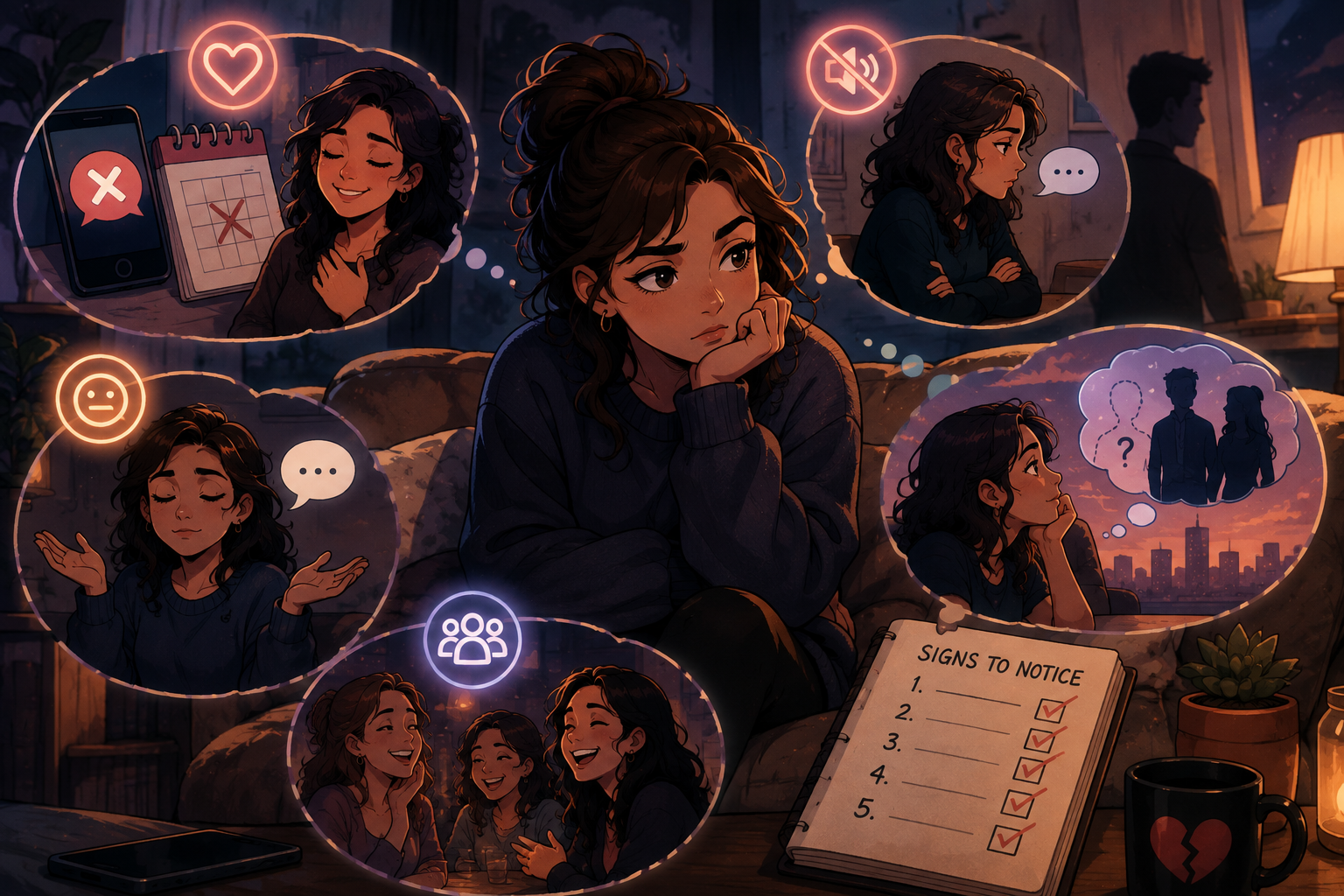
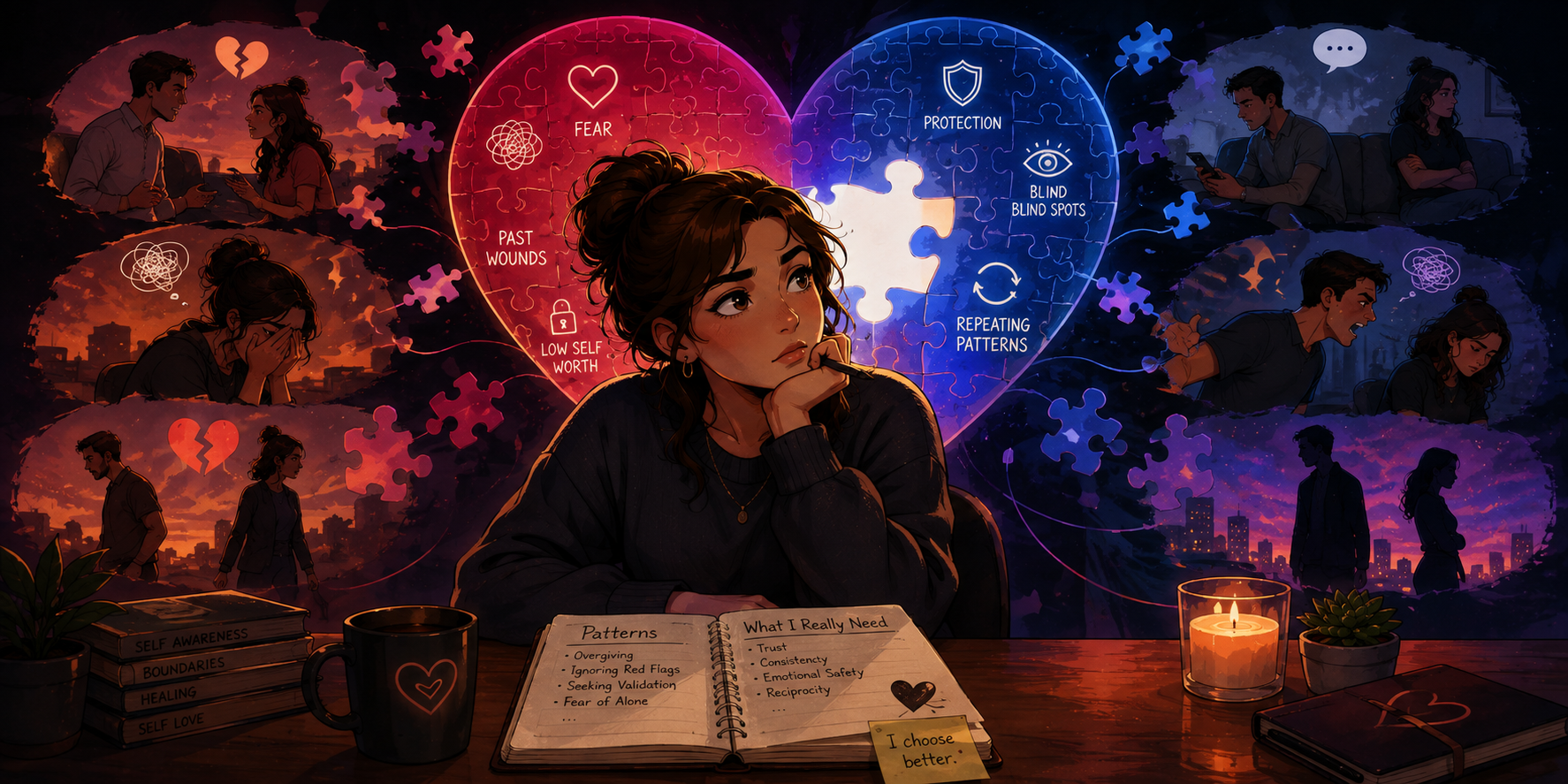
Here's an uncomfortable little fact: you've probably dated several completely different people who somehow made you feel the exact same way. Different face, different job, different taste in music — same ending. If that sounds oddly specific, congratulations, you have a pattern. We all do.
Yours just has a name now: The Open Heart, The Guarded Protector, The Comfort Seeker, or The Silent Seeker.
Before you spiral — this isn't a life sentence. It's closer to finding out you've been driving with the parking brake half-on. Annoying? Yes. Permanent? Not even close.
Why your brain keeps replaying the same relationship
Psychologists have been studying this for decades under a concept called attachment style — basically, the emotional blueprint you built as a kid for how safe (or unsafe) closeness feels.
According to research popularized in Psychology Today, roughly 60% of adults are securely attached, while about 20% lean anxious and another 20% lean avoidant.
place after ~60% of the article If any of this hit a little too close to home, there's a good chance you've already lived out the consequences — you just didn't have language for it yet. Here are the 5 clearest signs you're stuck in the wrong relationship right now. Sign #3 is the one almost everyone misses.
That means there's a very good chance that at least one in three people you've dated — maybe including you — walked into the relationship with a nervous system already braced for a specific outcome, before either of you said a single word.
That's the real plot twist: your "type" was never really about hair color or humor. It's about which flavor of emotional risk feels familiar enough to call "chemistry."
Now let's get into what your specific result actually means.
The Open Heart
You're the person who texts back in four minutes and means every word of it. Refreshing, honestly — most people are playing three-day-response-time chess and you never learned the rules. The catch: you tend to hand over your full emotional investment before you've confirmed the other person even ordered the same thing off the menu.
It's not that you love "too much" (there's no such thing). It's a pacing issue — you're sprinting a relationship that hasn't been confirmed as a two-person race yet.
Try this: the next time you feel the urge to plan a future after date two, ask yourself one question — "What has this person actually done, not said, that earned this?" Words are free. Actions are the receipt.
The Guarded Protector
You've been burned, you adapted, and honestly? Smart move. The problem is your alarm system doesn't have an off switch anymore — it just has "sensitive" and "extremely sensitive."
Somewhere along the way, "being careful" turned into unofficial background checks disguised as small talk. Good people can absolutely feel like they're failing an exam they were never told they signed up for.
Try this: name the test out loud, even just to yourself. "I'm watching to see if you'll disappear when things get real."
Once you can see the test, you can start deciding when it's actually necessary — instead of running it on autopilot on someone who's already shown up five times in a row.
The Comfort Seeker
You're not indecisive. You're loyal to a fault, and staying feels safer than the unknown, even when "staying" has quietly turned into "settling." The tell is usually one word: fine.
Not "good." Not "great." Fine. That word is doing a lot of unpaid overtime in your vocabulary.
Try this: next time someone asks how things are going, catch yourself before you say "fine" and finish the sentence honestly, even just in your head. The gap between what you actually think and what you default to saying is exactly the size of your blind spot.
The Silent Seeker
You feel everything at full volume internally and communicate it at a whisper externally, then wonder why nobody can hear you. You're not guarded exactly — you're just waiting to be understood instead of doing the harder thing, which is making yourself understood.
It's a rough trade: the right people miss you because you never actually told them what was going on.
Try this: pick one thing this week you'd normally keep to yourself, and say it out loud to the person it's about. Not a hint. Not a mood. An actual sentence.
Why the pattern keeps winning (until it doesn't)
None of these are character flaws — they're strategies that made sense once, usually in a relationship or family dynamic that taught you exactly how closeness works.
The problem is that strategies don't come with expiration dates. They just keep running quietly, showing up as "bad luck with relationships" instead of what they actually are: the same move, played on a different board.
Quick recap before you keep reading:
Your "type" is often really your nervous system's comfort zone, not your actual preference
Attachment patterns form early and repeat until they're consciously interrupted
The goal isn't to erase the pattern — it's to notice it before it makes the decision for you
FAQ
Can your love blind spot actually change? Yes — attachment research shows people can and do shift toward more secure patterns over time, especially with self-awareness and, often, a relationship or therapist that responds differently than what you're used to.
Is this the same thing as your attachment style? Closely related, but not identical. Attachment style is the underlying psychological framework; your "blind spot" here is how that framework tends to show up specifically in dating and relationships.
What if I relate to more than one archetype? Very common — most people are a primary pattern with a secondary one that shows up under stress. The quiz result reflects your dominant tendency, not the only one.